


The Carbon Capture Coalition has submitted recommendations to the U.S. Department of the Treasury and the Internal Revenue Service for inclusion in the 2026-2027 Priority Guidance Plan, urging action on Section 45Q tax credit guidance and other carbon management policies amid uncertainty surrounding the future of the Environmental Protection Agency’s greenhouse gas reporting program.
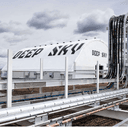
Deep Sky and TD Bank Group have signed a 10-year agreement under which TD will purchase more than 18,000 verified direct air capture carbon dioxide removal credits. The agreement supports the development of permanent carbon removal infrastructure in Canada and provides TD with Canadian-produced carbon removal credits over the next decade.
Climate Vault Solutions has added Cowboy Clean Fuels’ Triangle Unit project in Wyoming to its vetted carbon removal portfolio. The biomass-based project is the first of its kind approved by Climate Vault’s independent expert panel and will supply carbon removal credits through Climate Vault Solutions’ procurement platform.

Brazil’s regulatory framework for carbon capture, utilization and storage is emerging as a critical component of the country’s strategy to decarbonize heavy industry. As global emissions continue to rise and natural sequestration processes prove insufficient, Brazil is developing a policy and regulatory approach aimed at addressing emissions from hard-to-abate sectors while maintaining industrial competitiveness.

The federal government is investing $28.9 million through the Energy Innovation Program in 12 projects advancing carbon capture, renewable energy and smart grid innovation across Canada. The funding, announced by Natural Resources Minister Tim Hodgson, directs the largest share — $16.9 million — toward carbon capture, utilization and storage research and demonstration, with the remainder supporting renewable energy deployment and electricity grid modernization.

Saipem and Capsol Technologies ASA have signed a cooperation agreement to jointly develop industrial-scale carbon capture projects using Hot Potassium Carbonate technology, building on their existing collaboration on a Stockholm Exergi bioenergy plant currently under construction.
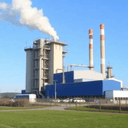
Lafarge France has signed a Front End Engineering Design (FEED) contract with Air Liquide for the eCapt‑Rhône du Teil project, marking a major step toward launching a CO₂ capture facility at the Le Teil cement plant. The installation is expected to begin operating in 2029 and will convert captured carbon into low‑carbon e‑methanol.

Engineered carbon removal activity remained strong in Q4 2025, driven by biogenic technologies such as BECCS and biochar, which together accounted for 86% of quarterly volumes. Microsoft led major purchases, including record-breaking deals in both BECCS and mineralization. December dominated activity due to end‑of‑year procurement cycles. As the market enters 2026, buyers are expected to prioritize reliable, scalable pathways while selectively expanding into emerging CDR technologies.

Nigeria issued its first industrial‑scale carbon‑removal credits through Releaf Earth, marking the country’s entry into the global carbon‑removal market. The 190 tonnes of biochar‑based credits were purchased by companies including Salesforce. Officials see carbon markets as a major economic opportunity as Nigeria works to diversify beyond oil.
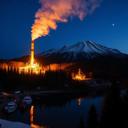
Deep Sky is applauding Quebec’s introduction of Bill 17, which creates a long‑awaited legal framework for underground carbon storage. The company says the legislation will support permanent carbon removal, unlock major investment, and help the province reach its climate targets.

The Allen Parish Police Jury is backing proposed state legislation that would give local governments authority to approve or reject carbon capture projects and limit the use of eminent domain. Officials say growing public concerns over safety and property rights are driving the push for local control.

MODEC has signed a joint development agreement with Eld Energy to scale up an integrated SOFC and CO₂ capture system for FPSOs, targeting a 120-kW prototype with onshore testing in 2027 and offshore demonstration from 2028.

As world leaders gathered in Belém, Brazil, for COP30 in November 2025, blockchain-based carbon credits emerged as both a promising innovation and a contested tool in global climate action. Advocates argue the technology could improve transparency, accountability and funding for reforestation and conservation, particularly in the Global South. Critics warn that without stronger regulation, blockchain credits risk enabling greenwashing and delaying meaningful emissions reductions. Hosting the summit in the Amazon placed renewed focus on how emerging technologies could support credible, equitable climate finance.

The data center industry faces a growing power shortage as AI-driven demand outpaces the ability to build new electricity generation, according to Uptime Institute’s 2026 predictions. The report says AI infrastructure is becoming more concentrated among large providers, power costs are rising, and operators may turn to carbon capture, on-site generation, and limited AI automation to manage growth and resiliency challenges.

The Carbon Removers has secured nearly £1 million in backing from South of Scotland Enterprise to accelerate its expansion across the UK and Europe, kickstarting a wider fundraising round. Headquartered near Dumfries, the company plans to remove one million tonnes of CO₂ annually by 2030 and aims to generate £1 billion in annual revenue by 2034/35, while supporting Scotland’s transition to net zero. The investment reinforces the South of Scotland’s growing reputation as a hub for innovation, with strong support from government and regional leaders.
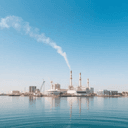
Abu Dhabi’s Supreme Council for Financial and Economic Affairs has launched a new Carbon Capture Policy to regulate Carbon Capture, Utilisation and Storage (CCUS) activities across the emirate and support significant emissions reductions. The policy establishes a comprehensive legislative and regulatory framework, promotes partnerships and shared infrastructure, and encourages investment, job creation and economic diversification. It reinforces Abu Dhabi’s and the UAE’s commitment to environmental sustainability, international climate efforts and long-term natural resource conservation.
Treasury and the IRS issued guidance establishing a safe harbor for taxpayers claiming the carbon capture tax credit for qualified carbon oxide stored in secure geological formations during 2025. The guidance allows alternative reporting and certification if federal greenhouse gas reporting tools are not available in time.
State lawmakers introduced a record number of bills on data centers in 2025 as the industry’s rapid growth raised concerns about power prices, water use and environmental impacts. While many states moved to attract data centers through tax incentives, legislators across parties also focused on protecting ratepayers and studying grid impacts. With demand for data centers expected to continue rising, state-level debates are likely to expand in 2026.

The EPA approved Texas’ request for primacy over Class VI injection well permitting, giving the state authority to regulate carbon capture wells and streamline approvals. State and federal leaders say the move will boost efficiency, investment, and water protection while supporting Texas’ energy sector.

North Dakota has turned its oil-and-gas-era regulatory strength into a competitive edge for carbon-capture permitting, positioning itself as a national leader in accelerating large-scale CCS deployment. The streamlined permit process has given the state an advantage in developing carbon-storage infrastructure ahead of many peers.
Despite shifting U.S. energy priorities, the voluntary carbon market strengthened in Q3 2025 with record trading volumes, diverse removal methods, and a surge of first-time corporate buyers. Microsoft’s landmark biomass deal with Vaulted Deep, alongside continued BECCS growth, signaled deepening confidence in engineered carbon removals as scalable climate solutions.

45Q and the One Big Beautiful Bill Act

SCS Engineers, in collaboration with the U.S. Environmental Protection Agency, stands on the verge of a groundbreaking Class VI well permit approval—driven by an innovative computational modeling approach that redefines how critical pressures are calculated.

Across the carbon management landscape, the conversation is shifting from possibility to proof. This issue captures that evolution. Rather than debating whether carbon capture and utilization can scale, our contributors examine how it is being engineered, financed and legislated into reality.

California’s new SB 614 strengthens the state’s carbon capture and storage efforts by setting safety standards for CO₂ pipelines, building on previous legislation to support climate innovation and clean energy investment

The German government has begun preparations for the next round of its “climate contract” support scheme for industry decarbonisation.

Gevo has signed a multi-year agreement with Swedish carbon removal firm Biorecro. The deal aims to accelerate the commercialization of carbon dioxide removal credits through its subsidiary, Net-Zero Richardton, at the Gevo North Dakota facility.

Brazil has launched a national CCUS Subcommittee under its Ministry of Mines and Energy to implement the country’s 2024 Fuel of the Future law and anchor its strategy for COP30. The group brings together Petrobras, TotalEnergies, FS Energia, SLB New Energy, and other key stakeholders to advance carbon capture, storage, and regulatory frameworks.

The Government of Canada has announced $5.8 million in funding for carbon capture, utilization, and storage projects in British Columbia. The investments will support Svante, Anodyne Chemistries, and Agora Energy Technologies in advancing CO₂ capture, storage, and conversion innovations, from flue gas utilization to producing valuable chemicals.
The U.S. EPA is seeking public comment on a draft permit for Marquis Carbon Injection LLC to store CO₂ underground in Putnam County, Illinois. The project would allow injection of up to 1.5 million metric tons annually over six years, with long-term monitoring to ensure safe sequestration and protection of drinking water.
Advertisement

@ Copyright 2026 - BBI International - All rights reserved.