

Aker Carbon Capture appoints Egil Fagerland as new CEO
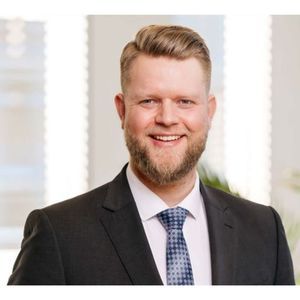
Since 2021, Fagerland has been instrumental in the development and expansion of Aker Carbon Capture. He came to Aker Carbon Capture from DeepOcean, where he was head of ERP and Business Systems. He previously held various roles in Aker Solutions from
November 14, 2023
BY Aker Carbon Capture
Advertisement
Advertisement
Related Stories

Mazda successfully demonstrated onboard CO₂ capture and storage during the Super Taikyu Series 2026, capturing 804 grams of CO₂ over a 24-hour race. The achievement marks a significant step toward practical application of the technology and Mazda’s goal of realizing carbon-negative mobility by 2035.

Brazil’s regulatory framework for carbon capture, utilization and storage is emerging as a critical component of the country’s strategy to decarbonize heavy industry. As global emissions continue to rise and natural sequestration processes prove insufficient, Brazil is developing a policy and regulatory approach aimed at addressing emissions from hard-to-abate sectors while maintaining industrial competitiveness.

Digital measurement and integrated data systems are shaping the success of CCUS projects by improving emissions visibility, reducing risk and enabling more confident design, operation and investment decisions.

Class VI wells are the regulatory and engineering backbone of large-scale carbon capture and storage (CCS) projects in the United States. As deployment accelerates, the ability to inject and permanently contain CO2 in deep saline formations has become central to project feasibility, regulatory approval and long-term performance.

Comprehensive data from Ethanol Producer Magazine’s U.S. and Canada Fuel Ethanol Plant Map reveals a rapidly evolving carbon capture, utilization and storage (CCUS) landscape, with more than 130 projects spanning multiple capture, transport and storage pathways.
Upcoming Events

@ Copyright 2026 - BBI International - All rights reserved.