

Capital Clean Energy Carriers Corp. has taken delivery of the world’s first 22,000-cubic-meter low-pressure liquid CO2 carrier, Active, marking a milestone for marine transportation within the emerging CCUS value chain. The vessel is designed to transport liquid CO2 while retaining flexibility to operate across conventional gas markets.
API released Recommended Practice 1192 to provide guidance for the safe and reliable transport of carbon dioxide by pipeline. The new standard addresses design, operation and integrity considerations specific to CO₂ as pipeline infrastructure for carbon storage continues to expand.
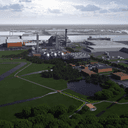
Cory Group has received approval from the UK Government to build a carbon capture and storage project at its Riverside waste-to-energy facility in Belvedere, targeting about 1.4 million tons of CO₂ per year.
AtmosClear has selected ExxonMobil to provide CO₂ transportation and storage services for its planned carbon capture projects. The agreement covers long-term sequestration of captured emissions in secure geological formations, supporting AtmosClear’s strategy to scale durable carbon removal.
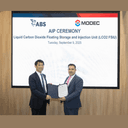
MODEC has received Approval in Principle from the American Bureau of Shipping for its Floating Storage and Injection Unit (FSIU), designed to handle liquid CO₂ at sea. The unit can receive, store, and inject up to 10 million tonnes of CO₂ annually into subsea reservoirs, eliminating the need for onshore storage and pipelines.
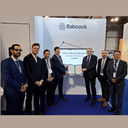
Babcock’s LGE business has secured Approval in Principle from Lloyd’s Register for its ecoCPTR® onboard carbon capture system. The technology combines Aqualung’s facilitated transport membrane capture with Babcock’s ecoCO2® system, offering a compact, modular solution for both new and retrofitted vessels.
John Crane, a global leader in rotating equipment solutions, and a business of Smiths Group plc, is proud to support one of the UK’s most significant carbon capture and storage initiatives with the supply of advanced dry gas sealing technology for high-performance CO₂ compression.
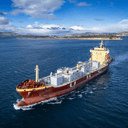
Seabound, a UK-based leader in marine carbon capture, has launched a first-of-its-kind onboard carbon capture project in partnership with Hartmann Group ("Hartmann"), InterMaritime Group ("InterMaritime"), and Heidelberg Materials Northern Europe. The captured carbon, bound in limestone and safely stored onboard, will be offloaded at the Port of Brevik, Norway, for use at Heidelberg Materials’ Brevik cement plant.
Global Centre for Maritime Decarbonisation Successfully Demonstrates World’s First End-to-End Value Chain for Onboard Captured CO2
By Global Centre for Maritime Decarbonisation
July 02, 2025
The Global Centre for Maritime Decarbonisation has successfully completed the world’s first maritime pilot demonstrating the full value chain of onboard captured carbon dioxide in China on 25 June 2025. This cross-sectoral demonstration highlights how captured CO2 from ships can be repurposed for industrial applications, linking maritime decarbonisation efforts with broader land-based carbon ecosystem.
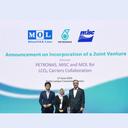
PETRONAS CCS Ventures, MISC Berhad (MISC), and Mitsui O.S.K. Lines, Ltd. (MOL) today announced the incorporation of a strategic joint venture. This joint venture will lead the development and act as the ultimate owner of Liquefied Carbon Dioxide (LCO₂) carriers, which are critical for transporting LCO₂ to designated storage sites.
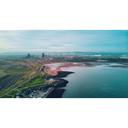
Worley Consulting has been chosen to continue delivering Lender’s Technical Advisor services for the Northern Endurance Partnership (NEP) and Net Zero Teesside Power (NZT Power). NEP is the CO2 transportation and storage provider to carbon capture projects across Teesside and the Humber in North-East England, while NZT Power aims to become the world’s first gas-fired power station with carbon capture and storage.
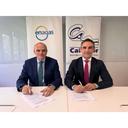
A deal has been signed to boost emission reduction projects at Calcinor's lime plants, which could cut emissions by around 900,000 tons of CO2 per year, plus the development of a logistics chain for capturing, transporting, liquefying, storing, and loading the CO2 onto vessels for subsequent use or permanent storage.

The journey to full-scale carbon capture in the United States follows safe pipelines.

United Living Group announced that its subsidiary, United Living Energy Limited, has been selected by Liverpool Bay CCS Limited, a member of the global energy-tech company, Eni, as one of the primary contractors to deliver CO2 Transportation and Storage infrastructure. The ULIS project is worth approximately £250 million over a three-year period.

Exxon Mobil Corporation announced an agreement with Calpine Corporation to transport and permanently store up to 2 million metric tons per annum of CO2 from Calpine’s Baytown Energy Center, a cogeneration facility near Houston.

The expansion of Northern Lights will increase the transport and storage capacity from 1.5 million to a minimum of 5 million tons of CO2 per year, enabling further reduction and removal of European industrial CO2 emissions.
California Resources Corporation and its carbon management business, Carbon TerraVault (CTV), announced the signing of a Memorandum of Understanding (MOU) with National Cement Company of California Inc. to provide carbon management services for the “Lebec Net Zero” - a first-of-its-kind initiative to produce carbon-neutral cement at National Cement’s facility in California.
POET announced they have entered into definitive agreements to connect POET’s Fairmont, Nebraska bioprocessing facility to the Tallgrass Trailblazer carbon dioxide pipeline. Under the arrangement, the POET facility will capture bioCO2 for transportation and permanent underground sequestration in Wyoming.
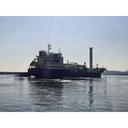
Northern Lights JV announced that the second CO2 transport ship, Northern Pathfinder, has been delivered at Dalian Shipbuilding Industry Co. in Dalian, China. The Northern Pathfinder follows the Northern Pioneer, which was delivered in November this year, and will play a crucial role in safely transporting liquefied CO2 from industrial capture sites in Europe to the Northern Lights receiving terminal in Øygarden, Norway.

The funding opportunity will provide future growth grants under DOE’s Carbon Dioxide Transportation Infrastructure Finance and Innovation program
The U.S. Department of Energy’s (DOE) announced $6 million for one selected project to explore the transport of carbon dioxide from onshore industrial and power generation facilities to offshore secure geologic storage in Texas state waters.

Summit Carbon Solutions announced that it has received three Class VI sequestration permits from the North Dakota Industrial Commission (NDIC), marking a critical step forward in the Midwest Carbon Express project.
Summit Carbon Solutions announced that the Minnesota Public Utilities Commission (PUC) has granted a permit for the company’s 28-mile pipeline route through Otter Tail and Wilkin Counties.
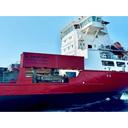
Finnish green tech company Langh Tech expands its portfolio of exhaust gas treatment solutions for ships by an innovative system for onboard carbon capture (OCC). Langh Tech’s OCC system supports customers in their decarbonization journey by reducing CO2 emissions from ship operation.
The two companies have signed a collaboration agreement to promote carbon footprint reduction projects through the development of a CO2 capture, transmission and storage logistics chain.
Summit Carbon Solutions announced the submission of its permit application to the South Dakota Public Utilities Commission. This filing reflects extensive engagement with South Dakotans to create a pipeline route shaped by direct stakeholder feedback, supporting agriculture and advancing energy innovation.
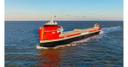
Denmark INEOS and Royal Wagenborg have signed a landmark agreement on the delivery of CO₂ transportation. This multi-year agreement, a significant step towards advancing carbon capture and storage (CCS) within the European Union, will see Royal Wagenborg supply a newly built CO₂ carrier dedicated to Project Greensand, led by INEOS with its partners Harbour Energy and Nordsøfonden.
Alto Ingredients, Inc. announced it entered into a CO2 Transportation and Sequestration Agreement with Vault 44.01 to provide transportation, injection and sequestration into the Mt. Simon sandstone formation in Illinois of CO2 produced at Alto Ingredients’ Pekin campus.
The U.S. Department of Energy (DOE) announced the formation of the Tribal Fossil Energy and Carbon Management Working Group, administered by DOE’s Office of Fossil Energy and Carbon Management. Tribes play a critical role in helping the U.S. meet its energy security and climate obligations while working to develop their vast energy, critical minerals and materials, and carbon management potential.
South Dakota voters on Nov. 5 rejected a law signed earlier this year that pertains to the development of CO2 pipelines within the state. Summit Carbon Solutions confirmed it still plans to file a permit application with the state later this month.
Advertisement

@ Copyright 2026 - BBI International - All rights reserved.