


Google announced a long-term agreement through the Symbiosis Coalition to purchase 260,000 metric tons of carbon removal from Thryve.Earth's agroforestry project in Indonesia, marking the first agroforestry initiative in its carbon removal program while supporting ecosystem restoration and local farmers.
Mantel and Aalborg CSP have entered a strategic supply agreement to develop standardized, modular molten salt tank systems for carbon capture projects. The partnership aims to reduce costs, simplify construction and accelerate deployment through transportable, shop-fabricated designs that can be replicated across commercial installations.

Canada and Alberta are advancing a proposed west coast oil pipeline and the Pathways carbon capture project, initiatives expected to reduce emissions, create about 175,000 jobs and attract more than $200 billion in investment.
Air Products is canceling its Louisiana Clean Energy Complex after determining the project would not meet its financial return requirements. The company expects to record up to $2.9 billion in pre-tax charges related to the decision and other clean energy project exits while moving ahead with a renewable ammonia marketing agreement with Yara tied to the NEOM Green Hydrogen Project in Saudi Arabia.

Amazon has expanded its carbon credit service to the United Kingdom, giving eligible companies access to vetted carbon credits and procurement support for emissions reduction and offsetting as part of their net-zero strategies.

Ambuja Cements and Leilac Limited have partnered to develop a commercial-scale low-carbon cement project in Kutch. The project will test carbon capture and electrification technologies aimed at reducing emissions and coal use, with potential to capture more than 1 million metric tons of CO₂ annually if scaled up.
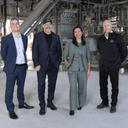
Australian startup MCi Carbon plans to raise US$50 million to expand its carbon capture technology after opening a demonstration plant in Newcastle. The company's process converts captured CO2 into materials used in construction, positioning it to benefit from growing global demand for carbon reduction solutions.

Holcim has launched CaptureLab, the cement industry's first industrial-scale carbon capture test platform, in Martres-Tolosane, France. The 2,500-square-meter facility uses an open innovation model to allow manufacturers, startups and researchers to test and validate advanced capture technologies in real-world conditions. The platform launches with an initial pilot project in partnership with Air Liquide.
The U.S. Department of Energy has selected the TerraSpark Energy Campus to receive up to $18.5 million in federal funding to support development of a 1.6-gigawatt coal-fired power facility with carbon capture technology in West Virginia. The project is expected to advance engineering and permitting work while supporting energy production, carbon management and job creation.

Svante Technologies and a sustainable packaging company have moved a BECCS project at a southeastern U.S. paper mill into feasibility study, targeting removal of more than 500,000 tonnes of biogenic CO₂ per year with permanent storage planned in the Gulf Coast region.

The Global Cement and Concrete Association and the Global CCS Institute have signed a two-year partnership agreement to accelerate the deployment of carbon capture and storage technologies across the global cement and concrete industry through collaboration on policy, technical knowledge sharing and stakeholder engagement.

Valmet and Linde announced May 26 a collaboration to deliver electrically driven CO₂ capture solutions to the pulp and paper industry. The partnership pairs Linde's HISORP® CC technology with Valmet's mill integration expertise to help producers reduce emissions without relying on steam or thermal energy.
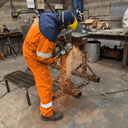
Aquaterra Energy has moved its Recoverable Abandonment Frame system into fabrication for deployment with the Northern Endurance Partnership carbon capture project in the U.K. The technology is designed to safely manage legacy offshore wells and could significantly reduce carbon storage remediation costs and timelines.

Worley has been selected by Dow to provide engineering design services for a key cogeneration and carbon capture facility in its Path2Zero project.
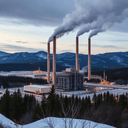
The Zero Emissions Platform has rebranded as Carbon Management Europe, aligning its name with its broader focus on industrial carbon management and evolving EU climate policies.

Canada has opened the world’s first surficial mineralization hub in Thetford Mines, Quebec, leveraging mine tailings to permanently remove carbon dioxide and positioning the region as a major center for next-generation carbon removal innovation.
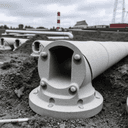
Costain, A E Yates and Hyperion Robotics will use 3D‑printed low‑carbon concrete sleepers for Teesside’s carbon capture pipeline network, cutting material use, emissions and construction risk while supporting the U.K.’s growing CCS infrastructure.
CF Industries and PepsiCo have launched a partnership to reduce emissions in potato farming by supplying growers with certified low‑carbon nitrogen fertilizer, starting with potatoes used for Frito‑Lay snack products.
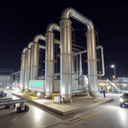
UP Catalyst and South Korea’s SGC Energy have partnered to commercialize technology converting captured CO₂ into battery-grade graphite and carbon nanotubes, advancing circular carbon production and strengthening Korea’s battery supply chain.

Microsoft has agreed to purchase 626,000 metric tons of carbon removal credits over 15 years from an Indigenous‑owned bioenergy with carbon capture project in Saskatchewan. The deal represents Microsoft’s first Canadian BECCS carbon removal agreement and one of the first such projects in the country involving Indigenous ownership.
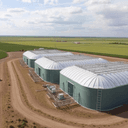
PureField Ingredients has secured EPA approval to permanently store carbon dioxide from its Kansas operations, enabling carbon capture at its Russell facility. The move places the company among the lowest carbon-intensity ethanol producers globally while supporting local agriculture and domestic food ingredient manufacturing.

As the industry navigates economic uncertainty, ambiguous policy frameworks and scrutiny around safety and scalability, one thing remains consistent: adaptability.
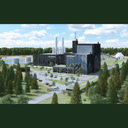
Aker Solutions has been awarded a front-end engineering and design contract by KN Energies for a CO₂ transshipment terminal in Klaipėda, Lithuania, part of the EU-backed CCS Baltic Consortium. The terminal, designed to handle approximately 2.8 million tonnes of CO₂ per year from Lithuanian and Latvian industrial sources, is targeted for commercial operation in 2030, with a final investment decision planned for 2027.

Kent has been awarded a front-end engineering design contract by EnEarth for the Prinos CO₂ Storage Project in northern Greece, a first-of-its-kind permitted carbon storage facility in the Mediterranean designed to store up to 2.8 million tonnes of CO₂ annually by 2029.
CURA, Grand Forks Concrete partner to decarbonize cement with first commercial electrochemical plant
CURA Climate Inc. and Grand Forks Concrete Ltd. have signed an agreement to build a pilot and first-of-kind commercial plant using CURA's electrochemical process to convert agricultural spent lime into low-carbon cement, advancing circular economy goals across the construction and agriculture sectors.
Svante Technologies has acquired Carbon Alpha Corporation, gaining the North Star BECCS project in Saskatchewan — developed alongside the Meadow Lake Tribal Council — along with CO2 pipeline and storage assets, as the company moves to build out a fully integrated carbon management platform in western Canada.
Carbon Direct and C2X have partnered on the Beaver Lake Biofuels project in Louisiana, which will convert forestry residues into low‑carbon biomethanol and store 1 million tonnes of CO₂ per year. The project repurposes a former industrial site, supports local jobs, and has already secured major long‑term commitments—including 3.6 million tonnes of removals for Microsoft. The facility is expected to begin delivery in 2029 and will help meet growing demand for biomethanol in shipping and aviation.
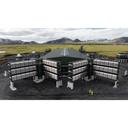
Climeworks and Tapestry announced a 10‑year partnership that includes Tapestry’s first purchase of carbon removals. The agreement gives Tapestry access to Climeworks’ diversified portfolio of engineered and nature‑based carbon removal solutions, supporting the company’s efforts to address Scope 1 emissions and advance long‑term climate goals. The deal marks Climeworks’ first partnership with a North American retail and consumer goods company.
ABB launched its first fully integrated gas analyzer package for CCUS applications, combining the Sensi+ CCUS, GCP100 and ACF5000 CCUS systems into a single turnkey solution. The package provides real‑time CO₂ impurity monitoring to help industrial operators meet strict purity standards, protect pipelines and reduce engineering complexity. It is supported by ABB’s global service network and can be enhanced with the company’s CCS 360 digital twin technology.
Carbon Direct has launched CDR 2.0, a new framework aimed at overcoming persistent financing and delivery barriers in the carbon removal industry. The initiative introduces five pillars designed to move the sector from corporate commitments to the successful deployment and operation of high‑durability carbon dioxide removal projects.
Advertisement

@ Copyright 2026 - BBI International - All rights reserved.