


Elemental Energies has acquired Applied Petroleum Technology AS, strengthening its subsurface offering with advanced geochemistry, basin modeling and laboratory analysis. The acquisition expands the company’s integrated technical capabilities across the well lifecycle and increases its global workforce to more than 300 employees.

MISC Berhad and K Line have secured a long-term charter from Northern Lights for a 12,000-cubic-meter newbuild LCO₂ carrier, marking MISC’s entry into CO₂ shipping and supporting the expansion of Europe’s first open-access CCS project.
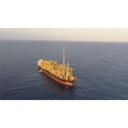
MODEC has signed a joint development agreement with Eld Energy to scale up an integrated SOFC and CO₂ capture system for FPSOs, targeting a 120-kW prototype with onshore testing in 2027 and offshore demonstration from 2028.
Thermax Limited and HPCL have signed an MoU at India Energy Week 2026 to collaborate on sustainable energy technologies, including green hydrogen, carbon capture and bio-based fuels, supporting India’s energy transition and “Make in India” goals.
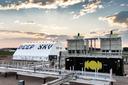
Nikkiso CE&IG supported the commissioning of Deep Sky Alpha in Alberta, Canada’s first operational facility to capture and permanently store atmospheric CO2 in sedimentary formations. The technology-agnostic DAC platform integrates multiple capture systems and is designed to remove up to 3,000 metric tons of CO2 annually, marking a significant step toward the commercialization and industrialization of scalable carbon removal technologies.
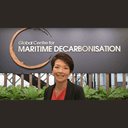
GCMD’s life-cycle assessment of Project CAPTURED shows that onboard CO₂ capture combined with mineralisation-based utilisation can reduce emissions more than permanent storage, with potential savings of up to 71% under optimised conditions. The study also notes that current maritime GHG accounting frameworks underestimate the benefits of CO₂ utilisation, highlighting the need for more comprehensive measurement and reporting.

Gevo has named Alex Clayton Chief Carbon Officer as part of its strategic realignment, aiming to expand its voluntary carbon market business. The company’s North Dakota facility produces engineered carbon dioxide removal credits with thousand-year permanence, supporting both emissions reduction and new revenue opportunities.
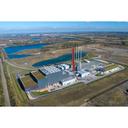
Encyclis has secured planning permission to develop a full-scale carbon capture plant at its Rookery South Energy Recovery Facility in Bedfordshire. The approval supports the company’s strategy to deploy carbon capture across its Energy-from-Waste portfolio and advance decarbonization of residual waste treatment.
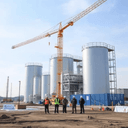
SAMSUNG E&A has started construction on a low-carbon ammonia plant in Indiana backed by the U.S. and South Korean governments. The project will produce 500,000 tons of ammonia annually while capturing significant carbon emissions, with completion targeted for 2029. The initiative underscores growing bilateral cooperation on energy transition and decarbonization.
Mercer Peace River Pulp and Svante have begun operating a CO₂ capture demonstration unit at a pulp mill in northern Alberta to evaluate solid sorbent carbon capture technology on biogenic emissions. The six-month pilot is intended to inform future engineering decisions and potential commercial-scale deployment in the pulp and paper industry.
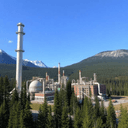
Mantel Capture has launched a FEED study for a commercial-scale carbon capture project in Canada that aims to capture 60,000 metric tons of CO₂ annually. The project builds on the company’s molten borate technology and signals growing industrial adoption of energy-efficient carbon capture solutions.

Onnu and ReGenEarth announced a strategic partnership to develop a fully integrated anaerobic digestion and pyrolysis project at ReGenEarth’s Sedgefield site, transforming an existing AD facility into a circular carbon removal and renewable energy hub. The deployment includes dual CarboFlow pyrolysis units engineered to produce biochar, enhance feedstock utilization and support high-integrity carbon credit pathways. The project serves as a model for future AD–pyrolysis systems planned across the UK and internationally.

Worley has been selected to oversee engineering, procurement and construction management for what will be the United Kingdom’s first full-scale carbon capture facility for cement production. The project, located at Heidelberg Materials’ Padeswood plant in North Wales, is designed to capture about 800,000 tons of carbon dioxide annually and is expected to be operational in 2029. The development marks a major milestone in the UK’s carbon reduction efforts and the HyNet industrial decarbonization cluster.
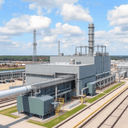
Google has signed its first corporate agreement to support a natural gas power plant equipped with carbon capture and storage, partnering with Broadwing Energy in Decatur, Illinois. The project will capture about 90% of the plant’s CO₂ emissions and aims to advance CCS as a reliable clean-firm power source for the U.S. grid.
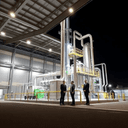
Greenlyte Carbon Technologies has inaugurated the world’s first LiquidSolar SNG plant, marking a major step toward commercial-scale production of synthetic fuels and strengthening North Rhine-Westphalia’s position as a hub for next-generation energy industries.
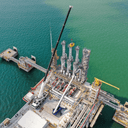
Technip Energies has been awarded a contract to supply three fully electric marine loading arms for Phase 2 of the Northern Lights CO₂ transport and storage project, marking a first-of-a-kind design that eliminates hydraulics and advances safety and environmental performance.
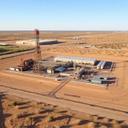
Return Carbon and the Permian Energy Development Lab have launched the Trinity Campus, a new test site designed to validate next-generation direct air capture and carbon storage technologies in real-world conditions in the Permian Basin.
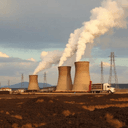
Verde AgriTech has entered into an exclusive partnership with UNDO Carbon Ltd. to develop and commercialize high-quality carbon removal credits through Enhanced Rock Weathering projects in Brazil. The collaboration combines Verde’s mineral resources and agricultural network with UNDO’s technology and MRV expertise. The deal marks Verde’s first major step into the carbon credit market.
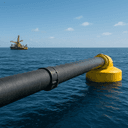
Aramis has opened its tender for linepipe supply for a 200 km, 22-mtpa offshore CO₂ pipeline, a major step toward launching its carbon capture and storage system by 2030.

The EPA approved Texas’ request for primacy over Class VI injection well permitting, giving the state authority to regulate carbon capture wells and streamline approvals. State and federal leaders say the move will boost efficiency, investment, and water protection while supporting Texas’ energy sector.

PlanetWEST has launched MIDAC, a mobile particulate-capture system targeting Black Carbon pollution in the Gulf’s most polluted cities. The new technology integrates with vehicles to clean urban air and reduce climate-warming emissions.
Carbon Direct has acquired Pachama to combine Carbon Direct’s scientific expertise with Pachama’s monitoring and digital-MRV platform, advancing high-quality nature-based carbon removal and restoration projects.
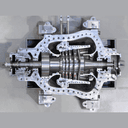
Capsol Technologies has signed a strategic cooperation agreement with Everllence to integrate compression and expansion equipment into its CapsolEoP® carbon-capture platform. The partnership aims to standardize equipment packages, simplify procurement for developers, reduce costs, and accelerate deployment of capture projects.
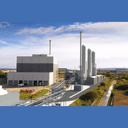
enfinium has submitted a planning application to Flintshire County Council to install full-scale carbon-capture technology at the Parc Adfer energy-from-waste facility in Deeside, North Wales. If approved, the project would become Wales’s largest carbon-removal initiative and connect to the HyNet North West transport and storage network.

Avnos has secured up to $17 million in project financing from Shell US Gas and Power, LLC and Mitsubishi Corporation (Americas) to build its flagship HDAC™ facility, Project Cedar. The facility, coming online by the end of 2026, uses a water-positive, hybrid direct air capture design that eliminates external heat and water needs.

Google has signed a new agreement with Mombak to purchase 200,000 tons of CO₂ removal from large-scale native forest restoration in the Amazon. The partnership will also use Google DeepMind’s Perch AI to help quantify biodiversity benefits as Mombak expands its reforestation work.

Carbon Clean has signed an agreement with Samsung Engineering to collaborate on deploying large-scale modular carbon capture solutions for industrial facilities across Asia and the Middle East. The partnership will focus on accelerating the adoption of Carbon Clean’s CycloneCC technology in hard-to-abate sectors.
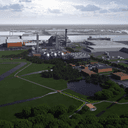
Cory Group has received approval from the UK Government to build a carbon capture and storage project at its Riverside waste-to-energy facility in Belvedere, targeting about 1.4 million tons of CO₂ per year.
CURA, a Canadian climatetech startup, has emerged from stealth with an electrochemical process that can cut cement CO₂ emissions by up to 85% by splitting limestone into zero-carbon lime and a pure CO₂ stream.

Holcim’s Carbon Hub project in Câmpulung, Romania, has secured a grant from the European Commission’s EU Innovation Fund, making it the first large-scale onshore CCS initiative in Eastern Europe. The project plans to capture CO₂ from cement and lime production, transport it via a newly constructed pipeline, and store it underground.
Advertisement

@ Copyright 2026 - BBI International - All rights reserved.