

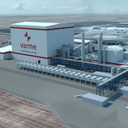
Capsol Technologies has signed a rental agreement with a major European cement producer to deploy its CapsolGo® six-month demonstration campaign for carbon capture and liquefaction at a cement plant. The campaign, beginning in Q1 2026, will generate operational data to support future CCS investment decisions.

Gevo has delivered its first certified carbon dioxide removal credits (CORCs) to Biorecro North America under the Puro.earth standard. The delivery marks the start of a multiyear deal expected to generate about $26 million over five years.
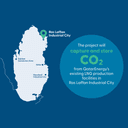
QatarEnergy has awarded an EPC contract for a carbon capture and sequestration project at its Ras Laffan LNG facilities. Designed to capture up to 4.1 million tons of CO₂ per year and positioning the company among the world leaders in large-scale CCS.
ADM and Super6 Carbon have signed a memorandum of understanding to produce carbon dioxide removal (CDR) credits by permanently storing CO₂ at ADM’s existing CCS site in Decatur, Illinois, leveraging the Mt. Simon sandstone formation beneath the site.
OGCI’s latest report explores how naturally reactive rock formations can be used for permanent CO₂ mineralization, potentially expanding global storage capacity and offering new pathways for CCUS where conventional storage sites are scarce.
NextChem is partnering with Uzkimyosanoat in Uzbekistan to conduct a feasibility study and advance a carbon-capture and storage project using its proprietary NX Decarb™ technology.
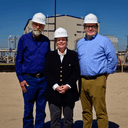
Mid America Agri Products’ ethanol facility in Madrid, Nebraska, has begun sending captured CO₂ through Tallgrass’s Trailblazer pipeline for permanent underground storage in Wyoming, marking the site’s first shipment.
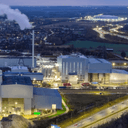
Honeywell’s advanced carbon-capture technology will be deployed at a project led by Wabash Valley Resources (WVR) to convert a former gasification power plant facility in West Terre Haute, Indiana, into a low-carbon ammonia-fertilizer hub.

Embarking on a carbon capture, utilization and storage (CCUS) project is a significant step toward environmental stewardship and regulatory compliance.

Across the carbon management landscape, the conversation is shifting from possibility to proof. This issue captures that evolution. Rather than debating whether carbon capture and utilization can scale, our contributors examine how it is being engineered, financed and legislated into reality.
The Case for Betting on Energy’s Underestimated Sectors. With headlines dominated by promises of artificial intelligence (AI), quantum computing and the relentless rise in data center energy needs, it can be easy to fall prey to salience bias, or the tendency to overvalue what is most visible and novel.
GE Vernova Inc. and YTLPowerSeraya Pte Limited announced the collaboration of the two companies on a feasibility study to analyze the lowering of carbon emissions of YTLPS’ H-Class Combined Cycle Gas Turbine plant on Jurong Island, Singapore.

BASF and ANDRITZ Group have signed a license agreement for the use of BASF’s proprietary gas treatment technology, OASE blue, in a carbon capture project planned to be implemented in the city of Aarhus, Denmark. The project aims to capture approximately 435,000 tons of CO2 annually from the flue gases of a waste-to-energy plant for sequestration; the city of Aarhus has set itself the goal of becoming CO2-neutral by 2030.

California Resources Corporation hosted a groundbreaking ceremony for Carbon TerraVault I (CTV I), the Golden State's first carbon capture and storage project, developed to reduce emissions and support the state’s path to carbon neutrality by 2045.
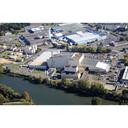
Veolia is partnering with Le Mans Métropole to launch the first phase of its comprehensive carbon capture and valorization program. This pioneering industrial-scale project will take place at Le Mans’ waste-to-energy facility — operated by Veolia for 50 years and a leader in innovation. The industrial demonstration unit will be operational in 2026, processing up to 10 tons of CO2 per day with a 90% capture rate.

The International Energy Agency reports that agriculture contributes roughly 24% of global greenhouse gas emissions, driven by fertilizer use and residue burning. SunnyDay Renewables aims to counter this through its $30 million biochar production facility in Wellington, Florida, which will convert agricultural waste into a carbon-rich soil amendment capable of sequestering over 75,000 tons of CO₂ annually.
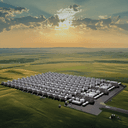
Deep Sky has selected Manitoba as the location, in Southwestern Manitoba, for its next commercial carbon removal facility, Deep Sky Manitoba.
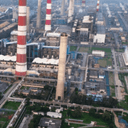
After operating successfully for two years, the pioneering carbon capture project at NTPC has reached a major milestone when CO2 captured from flue gas using Carbon Clean’s CaptureX semi-modular technology was used to produce the first drop of methanol.

Findings from the Global CCS Institute’s Global Status of CCS 2025 report underscores that Carbon Capture has strongly advanced despite global headwinds, with operational projects increasing 54%.

Prometheus Hyperscale, Spiritus, and Casper Carbon Capture announce a strategic partnership to develop a pioneering carbon-negative digital infrastructure campus in Wyoming.
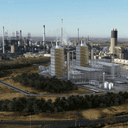
Leading power company, VPI, has been granted the first environmental permit in the UK for its selected capture technology, in a major step towards decarbonising the country.
Brineworks has secured €5 million in seed funding, led by SeaX Ventures, to bring its ultra low-cost Direct Air Capture technology to market. With operations expected by 2026, the company is positioned to deliver durable, renewable-based carbon removal at scale.
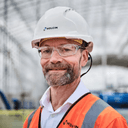
Holcim UK has appointed a new Carbon Capture, Utilization, and Storage (CCUS) Director to advance its strategy toward near-zero cement production. The role will lead Holcim’s CCUS projects and reinforce the company’s commitment to scaling carbon capture as a key pathway to net zero.
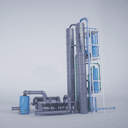
Capsol Technologies has been awarded its first carbon capture study for a European metal production plant, evaluating the use of its CapsolEoP® end-of-pipe solution. The project could capture several hundred thousand tonnes of CO₂ annually in one of the world’s most carbon-intensive sectors.

Gevo has signed a multi-year agreement with Swedish carbon removal firm Biorecro. The deal aims to accelerate the commercialization of carbon dioxide removal credits through its subsidiary, Net-Zero Richardton, at the Gevo North Dakota facility.

Microsoft’s Climate Innovation Fund has invested in Fortera to scale production of its ReAct™ low-carbon cement, securing rights to procure cement and environmental attribute certificates. The funding supports the construction of Fortera’s first full-scale 400,000 ton-per-year commercial plant.

GE Vernova and Deep Sky announced an agreement to deploy GE Vernova's Direct Air Capture (DAC) technology at Deep Sky Alpha in Alberta, Canada, marking a major step toward commercial-scale carbon removal. The system, scheduled to begin operations in 2026, will capture up to 1,500 tonnes of CO₂.

Aircapture has partnered with AIZAWA Concrete Corporation to launch Japan’s first commercial direct air capture (DAC) installation at AIZAWA’s Fukushima R&D Center. The project will provide a reliable on-site CO₂ supply for permanent mineralization in concrete.

Deep Sky has secured an $11 million bespoke credit facility from Finalta Capital to finance its flagship Alpha carbon removal facility in Alberta. Alpha, the world’s first cross-technology carbon removal site, became North America’s first DAC project to sequester CO₂ underground.
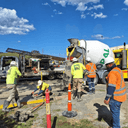
Boral has successfully trialed concrete made with recycled aggregates recarbonated via carbon capture technology from its Berrima cement plant. The pilot, supported by the federal CCUS Development Fund, replaced 50% of natural coarse aggregates with recarbonated recycled materials in a low-carbon mix.
Advertisement

@ Copyright 2026 - BBI International - All rights reserved.