

Infinium Announces Construction of Large Scale eFuels Production Facility in Texas
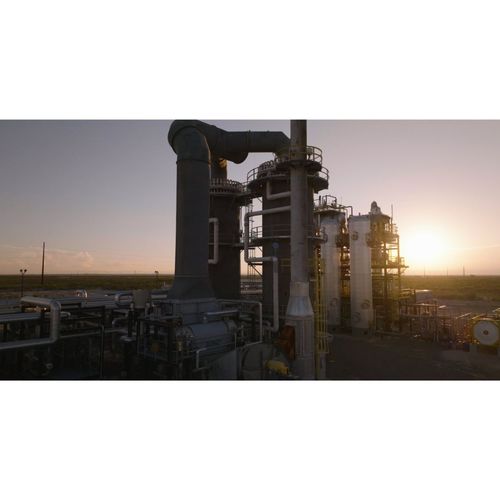
Project Roadrunner under construction in Pecos, TX // PHOTO: Infinium
May 28, 2025
BY Infinium
Advertisement
Advertisement
Related Stories
Foxconn and Pace CCS have launched a partnership to advance carbon capture and storage (CCS) technology by combining Foxconn’s precision manufacturing expertise with Pace CCS’s specialized design knowledge. The collaboration includes a new laboratory to test a chemical scavenger, already used in other industries, aimed at preventing corrosive reactions in CO₂ streams that can damage CCS infrastructure. Carbon capture is critical to achieving net-zero emissions, with global demand estimated at eight billion metric tons of CO₂ annually, requiring trillions of dollars in investment. Corrosion, erosion, and clogging caused by chemical reactions in CO₂ streams, including the formation of sulfuric and nitric acids, remain key technical challenges for the sector. Matthew Healey, managing director of Pace CCS, said the solution could turn a major technical challenge into a manageable operational expense, accelerating CCS deployment worldwide. Foxconn Chief Environment Officer Ron R. T. Horng added that the collaboration demonstrates how cross-industry partnerships can drive meaningful progress against climate change.

The Alaska Department of Natural Resources has launched a statewide CCUS information hub designed to support industry, researchers and the public with centralized geological, technical and regulatory data. The online platform consolidates decades of information to inform carbon capture, utilization and storage project development across Alaska.

Onnu and ReGenEarth announced a strategic partnership to develop a fully integrated anaerobic digestion and pyrolysis project at ReGenEarth’s Sedgefield site, transforming an existing AD facility into a circular carbon removal and renewable energy hub. The deployment includes dual CarboFlow pyrolysis units engineered to produce biochar, enhance feedstock utilization and support high-integrity carbon credit pathways. The project serves as a model for future AD–pyrolysis systems planned across the UK and internationally.
Carbon Direct has acquired Pachama to combine Carbon Direct’s scientific expertise with Pachama’s monitoring and digital-MRV platform, advancing high-quality nature-based carbon removal and restoration projects.

Google has signed a new agreement with Mombak to purchase 200,000 tons of CO₂ removal from large-scale native forest restoration in the Amazon. The partnership will also use Google DeepMind’s Perch AI to help quantify biodiversity benefits as Mombak expands its reforestation work.
Upcoming Events

@ Copyright 2026 - BBI International - All rights reserved.