

DOE Releases Carbon Management Strategy, Outlining Steps to Enable These Technologies to Support a Net-Zero Emissions Future

October 16, 2024
BY U.S. Department of Energy
Advertisement
Advertisement
Related Stories
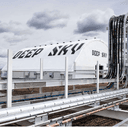
Deep Sky has issued North America's first independently certified direct air capture carbon removal credits from its Alberta facility. The credits, verified by Isometric and purchased by Microsoft and RBC, represent a milestone for the commercial deployment of durable carbon removal technology in the region.

Frontier announced $915 million in new funding for carbon removal technologies, increasing its total commitment to $1.8 billion. The group plans to concentrate investments on a smaller number of high-potential projects and help scale technologies such as ocean alkalinity enhancement, enhanced rock weathering and direct air capture. Frontier says stronger corporate purchasing and government policies will be critical to building a carbon removal industry capable of operating at gigaton scale.

The Carbon Capture Coalition has submitted recommendations to the U.S. Department of the Treasury and the Internal Revenue Service for inclusion in the 2026-2027 Priority Guidance Plan, urging action on Section 45Q tax credit guidance and other carbon management policies amid uncertainty surrounding the future of the Environmental Protection Agency’s greenhouse gas reporting program.
Deep Sky and TD Bank Group have signed a 10-year agreement under which TD will purchase more than 18,000 verified direct air capture carbon dioxide removal credits. The agreement supports the development of permanent carbon removal infrastructure in Canada and provides TD with Canadian-produced carbon removal credits over the next decade.

Climate Vault Solutions has added Cowboy Clean Fuels’ Triangle Unit project in Wyoming to its vetted carbon removal portfolio. The biomass-based project is the first of its kind approved by Climate Vault’s independent expert panel and will supply carbon removal credits through Climate Vault Solutions’ procurement platform.
Upcoming Events

@ Copyright 2026 - BBI International - All rights reserved.