

Oregon State University research makes key advance for capturing carbon from the air
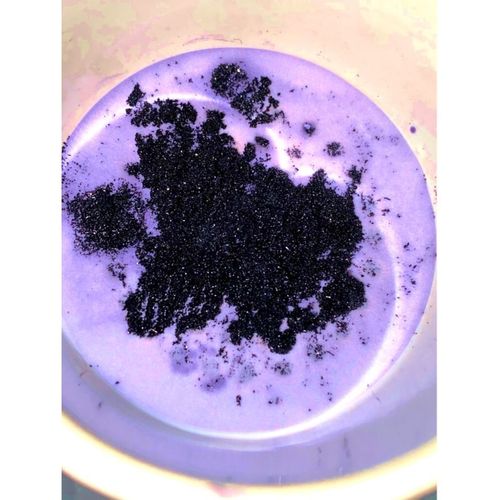
Vanadium, one of the CO2 capture materials, displaying a brilliant deep purple color // PHOTO: May Nyman, chemistry professor, OSU College of Science
February 15, 2024
BY Oregon State University
Advertisement
Advertisement
Related Stories
Researchers in Singapore have developed a process that converts shrimp shells and other organic waste into carbon-negative hydrogen, protein for aquaculture feed and calcium carbonate for construction materials, with commercialization efforts now underway.
MIT researchers have identified a new electrochemical approach to carbon capture using N-heterocyclic imine-based sorbents. The technology could reduce the energy demands of carbon capture systems while improving scalability and flexibility, offering a potential pathway toward more efficient carbon dioxide removal and utilization.

Mazda successfully demonstrated onboard CO₂ capture and storage during the Super Taikyu Series 2026, capturing 804 grams of CO₂ over a 24-hour race. The achievement marks a significant step toward practical application of the technology and Mazda’s goal of realizing carbon-negative mobility by 2035.

A new Carbon Direct report found that lengthy power grid interconnection delays in PJM and ERCOT could slow data center growth as electricity demand surges. The analysis showed most queued energy projects may never become operational, while approval timelines far exceed federal targets.

Brazil’s regulatory framework for carbon capture, utilization and storage is emerging as a critical component of the country’s strategy to decarbonize heavy industry. As global emissions continue to rise and natural sequestration processes prove insufficient, Brazil is developing a policy and regulatory approach aimed at addressing emissions from hard-to-abate sectors while maintaining industrial competitiveness.
Upcoming Events

@ Copyright 2026 - BBI International - All rights reserved.