

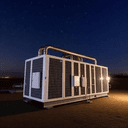
Deep Sky announced the deployment of Airbus’s Direct Air Capture (DAC) technology at its Deep Sky Alpha facility in Innisfail, Alberta. The modular DAC unit, derived from Airbus space life-support systems, removes 250 tons of CO₂ annually using a solid amine-based filtration and energy-recovery process. As part of its role as a carbon-removal project developer, Deep Sky continues to expand its portfolio by partnering with multiple DAC technology providers and operating what it calls the world’s first carbon-removal commercialization center. Supported by significant investments—including a USD $40 million grant from Breakthrough Energy Catalyst and long-term carbon credit purchase agreements with the Royal Bank of Canada and Microsoft—the company aims to scale carbon-removal solutions across Canada.
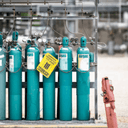
Air Liquide Singapore and Aster Chemicals and Energy have signed a memorandum of understanding to collaborate on developing an autothermal reformer with integrated carbon capture, advancing low-carbon hydrogen production in support of Singapore’s national hydrogen strategy.
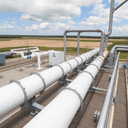
CO280 Solutions Inc. has completed a successful field pilot using SLB Capturi’s liquid amine carbon capture technology at a U.S. Gulf Coast pulp and paper mill, achieving a 95% capture efficiency over more than 4,000 operating hours.
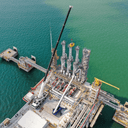
Technip Energies has been awarded a contract to supply three fully electric marine loading arms for Phase 2 of the Northern Lights CO₂ transport and storage project, marking a first-of-a-kind design that eliminates hydraulics and advances safety and environmental performance.
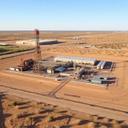
Return Carbon and the Permian Energy Development Lab have launched the Trinity Campus, a new test site designed to validate next-generation direct air capture and carbon storage technologies in real-world conditions in the Permian Basin.

Mazda Motor Corporation has begun demonstration experiments of its new Mazda Mobile Carbon Capture system, debuting the technology on a race car during the Super Taikyu Series in Japan. The device uses zeolite material to adsorb CO₂ directly from a vehicle’s exhaust and was tested using carbon-neutral biodiesel fuel. Mazda plans to refine the system through continued trials as part of its goal to enable driving that results in net CO₂ reduction by 2035.
Verde AgriTech has entered into an exclusive partnership with UNDO Carbon Ltd. to develop and commercialize high-quality carbon removal credits through Enhanced Rock Weathering projects in Brazil. The collaboration combines Verde’s mineral resources and agricultural network with UNDO’s technology and MRV expertise. The deal marks Verde’s first major step into the carbon credit market.
The carbon capture materials market is projected to grow from $66.90 billion in 2025 to $99.09 billion by 2030, driven by climate policies, net-zero commitments and new technologies. Liquid solvents, adsorption processes and pre-combustion techniques lead growth, with the oil and gas sector remaining the largest adopter.

PETRONAS CCS Ventures received Malaysia’s first offshore CCS assessment permit for the Duyong field, allowing geological studies with TotalEnergies and Mitsui. The permit marks a major milestone for Malaysia’s emerging CCS industry and supports PETRONAS’ push toward net-zero emissions by 2050.

PlanetWEST has launched MIDAC, a mobile particulate-capture system targeting Black Carbon pollution in the Gulf’s most polluted cities. The new technology integrates with vehicles to clean urban air and reduce climate-warming emissions.
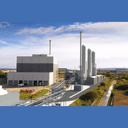
enfinium has submitted a planning application to Flintshire County Council to install full-scale carbon-capture technology at the Parc Adfer energy-from-waste facility in Deeside, North Wales. If approved, the project would become Wales’s largest carbon-removal initiative and connect to the HyNet North West transport and storage network.

Gevo’s North Dakota facility has sold its remaining 2025 Section 45Z clean-fuel production tax credits for US $30 million, bringing its total contracted 2025 credits to US $52 million. The credits stem from the facility’s ethanol production, carbon-sequestration efforts, and operational efficiencies.

CURA, a Canadian climatetech startup, has emerged from stealth with an electrochemical process that can cut cement CO₂ emissions by up to 85% by splitting limestone into zero-carbon lime and a pure CO₂ stream.

Saipem has initiated the fourth and final testing phase of its pilot CO₂-capture plant at a cement facility in Poland using its enzyme-based “CO₂ Solutions” technology, part of the ACCSESS project.
KBC has released version 7.6 of its Multiflash® software, offering enhanced modeling capabilities for CO₂-rich systems and complex fluids, aimed at supporting CCS and decarbonization efforts in upstream and process industries
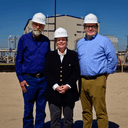
Mid America Agri Products’ ethanol facility in Madrid, Nebraska, has begun sending captured CO₂ through Tallgrass’s Trailblazer pipeline for permanent underground storage in Wyoming, marking the site’s first shipment.
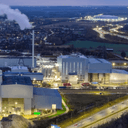
Honeywell’s advanced carbon-capture technology will be deployed at a project led by Wabash Valley Resources (WVR) to convert a former gasification power plant facility in West Terre Haute, Indiana, into a low-carbon ammonia-fertilizer hub.

North Dakota has turned its oil-and-gas-era regulatory strength into a competitive edge for carbon-capture permitting, positioning itself as a national leader in accelerating large-scale CCS deployment. The streamlined permit process has given the state an advantage in developing carbon-storage infrastructure ahead of many peers.

Despite shifting U.S. energy priorities, the voluntary carbon market strengthened in Q3 2025 with record trading volumes, diverse removal methods, and a surge of first-time corporate buyers. Microsoft’s landmark biomass deal with Vaulted Deep, alongside continued BECCS growth, signaled deepening confidence in engineered carbon removals as scalable climate solutions.

45Q and the One Big Beautiful Bill Act

How WACCE Technology Redefines CO2 Capture Economics

SCS Engineers, in collaboration with the U.S. Environmental Protection Agency, stands on the verge of a groundbreaking Class VI well permit approval—driven by an innovative computational modeling approach that redefines how critical pressures are calculated.

The Case for Betting on Energy’s Underestimated Sectors. With headlines dominated by promises of artificial intelligence (AI), quantum computing and the relentless rise in data center energy needs, it can be easy to fall prey to salience bias, or the tendency to overvalue what is most visible and novel.

Understanding Remote Sensing and the Future of Forest Credits

The International Energy Agency reports that agriculture contributes roughly 24% of global greenhouse gas emissions, driven by fertilizer use and residue burning. SunnyDay Renewables aims to counter this through its $30 million biochar production facility in Wellington, Florida, which will convert agricultural waste into a carbon-rich soil amendment capable of sequestering over 75,000 tons of CO₂ annually.
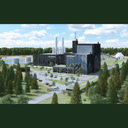
Aker Solutions has signed a memorandum of understanding with Swedish-based climate-tech company, Nordbex to develop a portfolio of future bioenergy with carbon capture, use and storage plants across Europe.

California’s new SB 614 strengthens the state’s carbon capture and storage efforts by setting safety standards for CO₂ pipelines, building on previous legislation to support climate innovation and clean energy investment
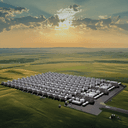
Deep Sky has selected Manitoba as the location, in Southwestern Manitoba, for its next commercial carbon removal facility, Deep Sky Manitoba.
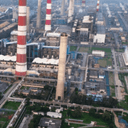
After operating successfully for two years, the pioneering carbon capture project at NTPC has reached a major milestone when CO2 captured from flue gas using Carbon Clean’s CaptureX semi-modular technology was used to produce the first drop of methanol.

Findings from the Global CCS Institute’s Global Status of CCS 2025 report underscores that Carbon Capture has strongly advanced despite global headwinds, with operational projects increasing 54%.
Advertisement

@ Copyright 2026 - BBI International - All rights reserved.