


Google has signed a new agreement with Mombak to purchase 200,000 tons of CO₂ removal from large-scale native forest restoration in the Amazon. The partnership will also use Google DeepMind’s Perch AI to help quantify biodiversity benefits as Mombak expands its reforestation work.

Carbon Clean has signed an agreement with Samsung Engineering to collaborate on deploying large-scale modular carbon capture solutions for industrial facilities across Asia and the Middle East. The partnership will focus on accelerating the adoption of Carbon Clean’s CycloneCC technology in hard-to-abate sectors.
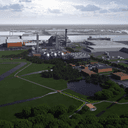
Cory Group has received approval from the UK Government to build a carbon capture and storage project at its Riverside waste-to-energy facility in Belvedere, targeting about 1.4 million tons of CO₂ per year.

Gevo’s North Dakota facility has sold its remaining 2025 Section 45Z clean-fuel production tax credits for US $30 million, bringing its total contracted 2025 credits to US $52 million. The credits stem from the facility’s ethanol production, carbon-sequestration efforts, and operational efficiencies.
CURA, a Canadian climatetech startup, has emerged from stealth with an electrochemical process that can cut cement CO₂ emissions by up to 85% by splitting limestone into zero-carbon lime and a pure CO₂ stream.

Skytree has officially entered the New Zealand market with its direct air capture technology, aligning its launch with the EU–NZ Business Summit and the countries’ joint commitment to green growth. The company aims to supply circular CO₂ to local industries.

Holcim’s Carbon Hub project in Câmpulung, Romania, has secured a grant from the European Commission’s EU Innovation Fund, making it the first large-scale onshore CCS initiative in Eastern Europe. The project plans to capture CO₂ from cement and lime production, transport it via a newly constructed pipeline, and store it underground.
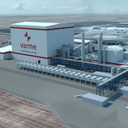
Capsol Technologies has signed a rental agreement with a major European cement producer to deploy its CapsolGo® six-month demonstration campaign for carbon capture and liquefaction at a cement plant. The campaign, beginning in Q1 2026, will generate operational data to support future CCS investment decisions.
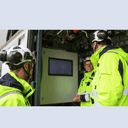
Capsol Technologies has signed a rental agreement with a major European cement producer to deploy its CapsolGo® six-month demonstration campaign for carbon capture and liquefaction at a cement plant. The campaign, beginning in Q1 2026, will generate operational data to support future CCS investment decisions.

Gevo has delivered its first certified carbon dioxide removal credits (CORCs) to Biorecro North America under the Puro.earth standard. The delivery marks the start of a multiyear deal expected to generate about $26 million over five years.
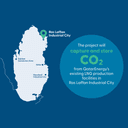
QatarEnergy has awarded an EPC contract for a carbon capture and sequestration project at its Ras Laffan LNG facilities. Designed to capture up to 4.1 million tons of CO₂ per year and positioning the company among the world leaders in large-scale CCS.

Saipem has initiated the fourth and final testing phase of its pilot CO₂-capture plant at a cement facility in Poland using its enzyme-based “CO₂ Solutions” technology, part of the ACCSESS project.
ADM and Super6 Carbon have signed a memorandum of understanding to produce carbon dioxide removal (CDR) credits by permanently storing CO₂ at ADM’s existing CCS site in Decatur, Illinois, leveraging the Mt. Simon sandstone formation beneath the site.
KBC has released version 7.6 of its Multiflash® software, offering enhanced modeling capabilities for CO₂-rich systems and complex fluids, aimed at supporting CCS and decarbonization efforts in upstream and process industries

OGCI’s latest report explores how naturally reactive rock formations can be used for permanent CO₂ mineralization, potentially expanding global storage capacity and offering new pathways for CCUS where conventional storage sites are scarce.
NextChem is partnering with Uzkimyosanoat in Uzbekistan to conduct a feasibility study and advance a carbon-capture and storage project using its proprietary NX Decarb™ technology.
Pacific Harbor Line, the rail operator serving the Ports of Long Beach and Los Angeles, has partnered with Remora, a Michigan-based startup, to develop mobile carbon-capture systems for freight locomotives, capturing CO₂ from exhaust and converting it into liquid for commercial use.
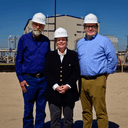
Mid America Agri Products’ ethanol facility in Madrid, Nebraska, has begun sending captured CO₂ through Tallgrass’s Trailblazer pipeline for permanent underground storage in Wyoming, marking the site’s first shipment.
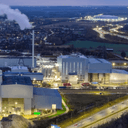
Honeywell’s advanced carbon-capture technology will be deployed at a project led by Wabash Valley Resources (WVR) to convert a former gasification power plant facility in West Terre Haute, Indiana, into a low-carbon ammonia-fertilizer hub.

North Dakota has turned its oil-and-gas-era regulatory strength into a competitive edge for carbon-capture permitting, positioning itself as a national leader in accelerating large-scale CCS deployment. The streamlined permit process has given the state an advantage in developing carbon-storage infrastructure ahead of many peers.

Despite shifting U.S. energy priorities, the voluntary carbon market strengthened in Q3 2025 with record trading volumes, diverse removal methods, and a surge of first-time corporate buyers. Microsoft’s landmark biomass deal with Vaulted Deep, alongside continued BECCS growth, signaled deepening confidence in engineered carbon removals as scalable climate solutions.

45Q and the One Big Beautiful Bill Act

How WACCE Technology Redefines CO2 Capture Economics

Embarking on a carbon capture, utilization and storage (CCUS) project is a significant step toward environmental stewardship and regulatory compliance.

SCS Engineers, in collaboration with the U.S. Environmental Protection Agency, stands on the verge of a groundbreaking Class VI well permit approval—driven by an innovative computational modeling approach that redefines how critical pressures are calculated.

Across the carbon management landscape, the conversation is shifting from possibility to proof. This issue captures that evolution. Rather than debating whether carbon capture and utilization can scale, our contributors examine how it is being engineered, financed and legislated into reality.

The Case for Betting on Energy’s Underestimated Sectors. With headlines dominated by promises of artificial intelligence (AI), quantum computing and the relentless rise in data center energy needs, it can be easy to fall prey to salience bias, or the tendency to overvalue what is most visible and novel.

Understanding Remote Sensing and the Future of Forest Credits

GE Vernova Inc. and YTLPowerSeraya Pte Limited announced the collaboration of the two companies on a feasibility study to analyze the lowering of carbon emissions of YTLPS’ H-Class Combined Cycle Gas Turbine plant on Jurong Island, Singapore.

BASF and ANDRITZ Group have signed a license agreement for the use of BASF’s proprietary gas treatment technology, OASE blue, in a carbon capture project planned to be implemented in the city of Aarhus, Denmark. The project aims to capture approximately 435,000 tons of CO2 annually from the flue gases of a waste-to-energy plant for sequestration; the city of Aarhus has set itself the goal of becoming CO2-neutral by 2030.
Advertisement

@ Copyright 2026 - BBI International - All rights reserved.