


Google announced the first major PPA for electricity produced from natural gas with CCS. The power will come from the Broadwing Energy plant in Decatur, IL. Google will purchase most of the electricity produced by the 400-megawatt plant to power its data centers connected to the same regional grid. Since the plant’s gas-fired turbine is equipped with CCS, it will emit less than 10% as much CO2 as conventional natural gas-fired power.
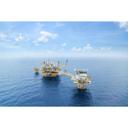
Mitsui Energy Development Co., Ltd. (MOECO), has joined a Carbon Capture and Storage (CCS) project at the Arthit gas field in the Gulf of Thailand, operated by Thailand's PTT Exploration and Production Public Company Limited. MOECO participates in the project via its subsidiary MOECO Thailand Co., Ltd., which holds a 4.7619% share in the CCS project. This project, the first CCS initiative in Thailand, aims to begin operations in 2028.

U.S. Environmental Protection Agency (EPA) issued three final Underground Injection Control Class VI permits to ExxonMobil for a project in Jefferson County, Texas. Under the Safe Drinking Water Act, these permits allow ExxonMobil to convert three existing test wells permitted by the state to carbon dioxide storage injection wells for long-term storage.

Puro.earth, the leading crediting platform for Carbon Dioxide Removal (CDR), announced the integration of CCS+ Initiative’s CDR methodology framework including CO2 capture from Bioenergy and Direct Air Capture with Carbon Capture and Storage into its certification and issuance framework.
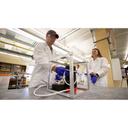
The Ole Miss AIChE team has built a 1-cubic-foot device this fall that is designed to capture carbon dioxide from the air. Their concept made it through an initial round of judging in the spring, and they plan to take it to the ChemECube competition, set for Nov. 2-3 at the annual AIChE student conference in Boston.

California Resources Corporation hosted a groundbreaking ceremony for Carbon TerraVault I (CTV I), the Golden State's first carbon capture and storage project, developed to reduce emissions and support the state’s path to carbon neutrality by 2045.
Carbon Direct, a global leader in science-driven carbon management, in collaboration with JPMorganChase, unveiled a new white paper: Optimizing for Biodiversity with Nature-Based Projects in the Voluntary Carbon Market: Principles for Pursuing Dual Outcomes. This guide offers organizations a data-driven blueprint for identifying and designing nature-based voluntary carbon market (VCM) projects that deliver both carbon and biodiversity outcomes.
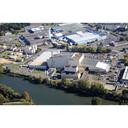
Veolia is partnering with Le Mans Métropole to launch the first phase of its comprehensive carbon capture and valorization program. This pioneering industrial-scale project will take place at Le Mans’ waste-to-energy facility — operated by Veolia for 50 years and a leader in innovation. The industrial demonstration unit will be operational in 2026, processing up to 10 tons of CO2 per day with a 90% capture rate.

The International Energy Agency reports that agriculture contributes roughly 24% of global greenhouse gas emissions, driven by fertilizer use and residue burning. SunnyDay Renewables aims to counter this through its $30 million biochar production facility in Wellington, Florida, which will convert agricultural waste into a carbon-rich soil amendment capable of sequestering over 75,000 tons of CO₂ annually.
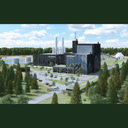
Aker Solutions has signed a memorandum of understanding with Swedish-based climate-tech company, Nordbex to develop a portfolio of future bioenergy with carbon capture, use and storage plants across Europe.

California’s new SB 614 strengthens the state’s carbon capture and storage efforts by setting safety standards for CO₂ pipelines, building on previous legislation to support climate innovation and clean energy investment
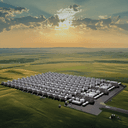
Deep Sky has selected Manitoba as the location, in Southwestern Manitoba, for its next commercial carbon removal facility, Deep Sky Manitoba.
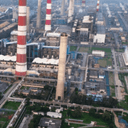
After operating successfully for two years, the pioneering carbon capture project at NTPC has reached a major milestone when CO2 captured from flue gas using Carbon Clean’s CaptureX semi-modular technology was used to produce the first drop of methanol.

Findings from the Global CCS Institute’s Global Status of CCS 2025 report underscores that Carbon Capture has strongly advanced despite global headwinds, with operational projects increasing 54%.

Prometheus Hyperscale, Spiritus, and Casper Carbon Capture announce a strategic partnership to develop a pioneering carbon-negative digital infrastructure campus in Wyoming.

The German government has begun preparations for the next round of its “climate contract” support scheme for industry decarbonisation.
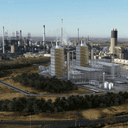
Leading power company, VPI, has been granted the first environmental permit in the UK for its selected capture technology, in a major step towards decarbonising the country.
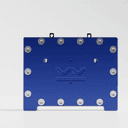
Brineworks has secured €5 million in seed funding, led by SeaX Ventures, to bring its ultra low-cost Direct Air Capture technology to market. With operations expected by 2026, the company is positioned to deliver durable, renewable-based carbon removal at scale.
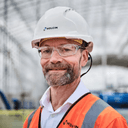
Holcim UK has appointed a new Carbon Capture, Utilization, and Storage (CCUS) Director to advance its strategy toward near-zero cement production. The role will lead Holcim’s CCUS projects and reinforce the company’s commitment to scaling carbon capture as a key pathway to net zero.

Schneider Electric has signed a landmark agreement with Climeworks to purchase 31,000 tons of high-durability carbon removal through 2039. The deal, Climeworks’ largest portfolio to date, includes Direct Air Capture and Storage, BECCS, and Enhanced Rock Weathering solutions.
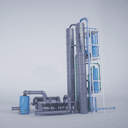
Capsol Technologies has been awarded its first carbon capture study for a European metal production plant, evaluating the use of its CapsolEoP® end-of-pipe solution. The project could capture several hundred thousand tonnes of CO₂ annually in one of the world’s most carbon-intensive sectors.

AtmosClear has selected ExxonMobil to provide CO₂ transportation and storage services for its planned carbon capture projects. The agreement covers long-term sequestration of captured emissions in secure geological formations, supporting AtmosClear’s strategy to scale durable carbon removal.
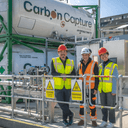
The Carbon Removers are scaling biogenic carbon capture and storage (BECCS) in Scotland, capturing CO₂ from distilleries and biogas facilities for mineralization into building aggregates and long-term storage. Partnering with Mangrove Systems, they have embedded robust measurement, reporting, and verification (MRV) to ensure every tonne removed is fully traceable and verifiable.

Gevo has signed a multi-year agreement with Swedish carbon removal firm Biorecro. The deal aims to accelerate the commercialization of carbon dioxide removal credits through its subsidiary, Net-Zero Richardton, at the Gevo North Dakota facility.

Microsoft’s Climate Innovation Fund has invested in Fortera to scale production of its ReAct™ low-carbon cement, securing rights to procure cement and environmental attribute certificates. The funding supports the construction of Fortera’s first full-scale 400,000 ton-per-year commercial plant.

GE Vernova and Deep Sky announced an agreement to deploy GE Vernova's Direct Air Capture (DAC) technology at Deep Sky Alpha in Alberta, Canada, marking a major step toward commercial-scale carbon removal. The system, scheduled to begin operations in 2026, will capture up to 1,500 tonnes of CO₂.
Aircapture has partnered with AIZAWA Concrete Corporation to launch Japan’s first commercial direct air capture (DAC) installation at AIZAWA’s Fukushima R&D Center. The project will provide a reliable on-site CO₂ supply for permanent mineralization in concrete.

Deep Sky has secured an $11 million bespoke credit facility from Finalta Capital to finance its flagship Alpha carbon removal facility in Alberta. Alpha, the world’s first cross-technology carbon removal site, became North America’s first DAC project to sequester CO₂ underground.
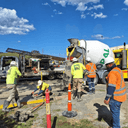
Boral has successfully trialed concrete made with recycled aggregates recarbonated via carbon capture technology from its Berrima cement plant. The pilot, supported by the federal CCUS Development Fund, replaced 50% of natural coarse aggregates with recarbonated recycled materials in a low-carbon mix.

Brazil has launched a national CCUS Subcommittee under its Ministry of Mines and Energy to implement the country’s 2024 Fuel of the Future law and anchor its strategy for COP30. The group brings together Petrobras, TotalEnergies, FS Energia, SLB New Energy, and other key stakeholders to advance carbon capture, storage, and regulatory frameworks.
Advertisement

@ Copyright 2026 - BBI International - All rights reserved.