

Green Plains has begun capturing, transporting and permanently sequestering biogenic CO₂ from its Nebraska facilities at Tallgrass’ Wyoming sequestration hub. The milestone supports the company’s low-carbon strategy and positions it to capture additional value through the federal 45Z clean fuel production tax credit.
State lawmakers introduced a record number of bills on data centers in 2025 as the industry’s rapid growth raised concerns about power prices, water use and environmental impacts. While many states moved to attract data centers through tax incentives, legislators across parties also focused on protecting ratepayers and studying grid impacts. With demand for data centers expected to continue rising, state-level debates are likely to expand in 2026.
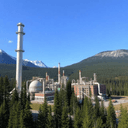
Mantel Capture has launched a FEED study for a commercial-scale carbon capture project in Canada that aims to capture 60,000 metric tons of CO₂ annually. The project builds on the company’s molten borate technology and signals growing industrial adoption of energy-efficient carbon capture solutions.

Capsol Technologies signed a memorandum of understanding with a major U.S. utility to develop the first commercial-scale gas power plant using the company’s CapsolGT carbon capture system. The agreement grants Capsol exclusivity to advance the project toward a final investment decision and includes options for wider deployment across the utility’s portfolio. CapsolGT is designed to capture more than 95 percent of CO₂ emissions from simple-cycle gas turbines while reusing waste heat to generate additional electricity.

Onnu and ReGenEarth announced a strategic partnership to develop a fully integrated anaerobic digestion and pyrolysis project at ReGenEarth’s Sedgefield site, transforming an existing AD facility into a circular carbon removal and renewable energy hub. The deployment includes dual CarboFlow pyrolysis units engineered to produce biochar, enhance feedstock utilization and support high-integrity carbon credit pathways. The project serves as a model for future AD–pyrolysis systems planned across the UK and internationally.

Heirloom announced new investments from the Development Bank of Japan and Chiyoda Corporation, expanding the company’s global network of strategic partners and building on its recent Series B fundraising. The partnerships highlight growing Japanese interest in direct air capture technologies as Japan prepares for its GX-ETS emissions trading system to enter mandatory compliance in 2026. The investments strengthen Heirloom’s financial and engineering capabilities as it scales DAC deployment and supports emerging carbon markets.

Cool Planet Technologies announced successful testing of its third-generation carbon capture membrane module, demonstrating industrial-scale performance at capture rates of up to 37,000 tons of CO₂ per year with 95 percent recovery. The results confirm scalability, alignment with simulation models and readiness for integration into Holcim’s demonstration project in Germany. The achievement marks a significant step toward commercial deployment of lower-cost, high-efficiency carbon capture solutions.

Worley has been selected to oversee engineering, procurement and construction management for what will be the United Kingdom’s first full-scale carbon capture facility for cement production. The project, located at Heidelberg Materials’ Padeswood plant in North Wales, is designed to capture about 800,000 tons of carbon dioxide annually and is expected to be operational in 2029. The development marks a major milestone in the UK’s carbon reduction efforts and the HyNet industrial decarbonization cluster.
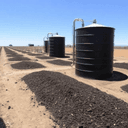
CarbonZero.Eco has completed its first commercial biochar production facility in Colusa County, California, and announced a landmark carbon credit agreement with Climeworks. The biochar startup, founded by 17-year-old Harper Moss, is partnering with almond farmers to convert agricultural waste into long-term carbon storage and regenerative soil products.
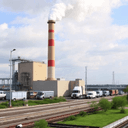
JERA Ventures has partnered with Newlab New Orleans to accelerate next-generation carbon capture technologies designed for low-concentration CO₂ emissions from gas-fired power plants. The collaboration will vet early-stage point-source capture startups and advance at least one technology toward pilot and potential commercial deployment by 2026.
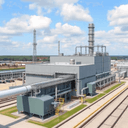
Deep Sky has formed a strategic partnership with Sumitomo Mitsui Banking Corporation to accelerate direct air capture and carbon dioxide removal solutions in Japan. The collaboration will focus on commercial pathways, financing models and policy frameworks to help scale durable CDR.
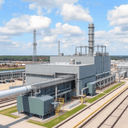
Google has signed its first corporate agreement to support a natural gas power plant equipped with carbon capture and storage, partnering with Broadwing Energy in Decatur, Illinois. The project will capture about 90% of the plant’s CO₂ emissions and aims to advance CCS as a reliable clean-firm power source for the U.S. grid.
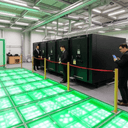
Climeworks has opened the world’s largest Direct Air Capture Innovation Center in Zurich, a facility designed to accelerate advances that reduce the cost and improve the efficiency of carbon removal. The center brings more than 50 engineers and specialists together to speed up technology development and support global scale-up.
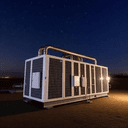
Deep Sky announced the deployment of Airbus’s Direct Air Capture (DAC) technology at its Deep Sky Alpha facility in Innisfail, Alberta. The modular DAC unit, derived from Airbus space life-support systems, removes 250 tons of CO₂ annually using a solid amine-based filtration and energy-recovery process. As part of its role as a carbon-removal project developer, Deep Sky continues to expand its portfolio by partnering with multiple DAC technology providers and operating what it calls the world’s first carbon-removal commercialization center. Supported by significant investments—including a USD $40 million grant from Breakthrough Energy Catalyst and long-term carbon credit purchase agreements with the Royal Bank of Canada and Microsoft—the company aims to scale carbon-removal solutions across Canada.
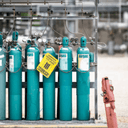
Air Liquide Singapore and Aster Chemicals and Energy have signed a memorandum of understanding to collaborate on developing an autothermal reformer with integrated carbon capture, advancing low-carbon hydrogen production in support of Singapore’s national hydrogen strategy.
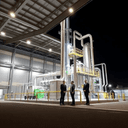
Greenlyte Carbon Technologies has inaugurated the world’s first LiquidSolar SNG plant, marking a major step toward commercial-scale production of synthetic fuels and strengthening North Rhine-Westphalia’s position as a hub for next-generation energy industries.
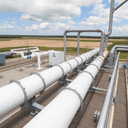
CO280 Solutions Inc. has completed a successful field pilot using SLB Capturi’s liquid amine carbon capture technology at a U.S. Gulf Coast pulp and paper mill, achieving a 95% capture efficiency over more than 4,000 operating hours.
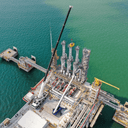
Technip Energies has been awarded a contract to supply three fully electric marine loading arms for Phase 2 of the Northern Lights CO₂ transport and storage project, marking a first-of-a-kind design that eliminates hydraulics and advances safety and environmental performance.
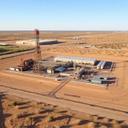
Return Carbon and the Permian Energy Development Lab have launched the Trinity Campus, a new test site designed to validate next-generation direct air capture and carbon storage technologies in real-world conditions in the Permian Basin.

Mazda Motor Corporation has begun demonstration experiments of its new Mazda Mobile Carbon Capture system, debuting the technology on a race car during the Super Taikyu Series in Japan. The device uses zeolite material to adsorb CO₂ directly from a vehicle’s exhaust and was tested using carbon-neutral biodiesel fuel. Mazda plans to refine the system through continued trials as part of its goal to enable driving that results in net CO₂ reduction by 2035.
Verde AgriTech has entered into an exclusive partnership with UNDO Carbon Ltd. to develop and commercialize high-quality carbon removal credits through Enhanced Rock Weathering projects in Brazil. The collaboration combines Verde’s mineral resources and agricultural network with UNDO’s technology and MRV expertise. The deal marks Verde’s first major step into the carbon credit market.
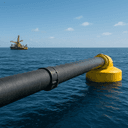
Aramis has opened its tender for linepipe supply for a 200 km, 22-mtpa offshore CO₂ pipeline, a major step toward launching its carbon capture and storage system by 2030.

The EPA approved Texas’ request for primacy over Class VI injection well permitting, giving the state authority to regulate carbon capture wells and streamline approvals. State and federal leaders say the move will boost efficiency, investment, and water protection while supporting Texas’ energy sector.
The carbon capture materials market is projected to grow from $66.90 billion in 2025 to $99.09 billion by 2030, driven by climate policies, net-zero commitments and new technologies. Liquid solvents, adsorption processes and pre-combustion techniques lead growth, with the oil and gas sector remaining the largest adopter.

PETRONAS CCS Ventures received Malaysia’s first offshore CCS assessment permit for the Duyong field, allowing geological studies with TotalEnergies and Mitsui. The permit marks a major milestone for Malaysia’s emerging CCS industry and supports PETRONAS’ push toward net-zero emissions by 2050.
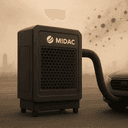
PlanetWEST has launched MIDAC, a mobile particulate-capture system targeting Black Carbon pollution in the Gulf’s most polluted cities. The new technology integrates with vehicles to clean urban air and reduce climate-warming emissions.
Carbon Direct has acquired Pachama to combine Carbon Direct’s scientific expertise with Pachama’s monitoring and digital-MRV platform, advancing high-quality nature-based carbon removal and restoration projects.
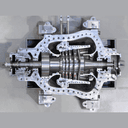
Capsol Technologies has signed a strategic cooperation agreement with Everllence to integrate compression and expansion equipment into its CapsolEoP® carbon-capture platform. The partnership aims to standardize equipment packages, simplify procurement for developers, reduce costs, and accelerate deployment of capture projects.
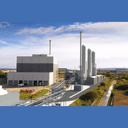
enfinium has submitted a planning application to Flintshire County Council to install full-scale carbon-capture technology at the Parc Adfer energy-from-waste facility in Deeside, North Wales. If approved, the project would become Wales’s largest carbon-removal initiative and connect to the HyNet North West transport and storage network.
Avnos has secured up to $17 million in project financing from Shell US Gas and Power, LLC and Mitsubishi Corporation (Americas) to build its flagship HDAC™ facility, Project Cedar. The facility, coming online by the end of 2026, uses a water-positive, hybrid direct air capture design that eliminates external heat and water needs.
Advertisement

@ Copyright 2026 - BBI International - All rights reserved.