


MISC Berhad and K Line have secured a long-term charter from Northern Lights for a 12,000-cubic-meter newbuild LCO₂ carrier, marking MISC’s entry into CO₂ shipping and supporting the expansion of Europe’s first open-access CCS project.
Carbonaide closes €3.7 million funding round to accelerate growth in construction industry
February 04, 2026
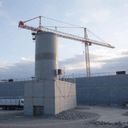
Carbonaide has raised €3.7 million in a funding round led by existing owners to scale its carbon dioxide mineralization technology for concrete, supporting international expansion, product development and broader adoption of carbon-negative construction materials.
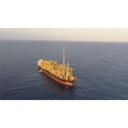
MODEC has signed a joint development agreement with Eld Energy to scale up an integrated SOFC and CO₂ capture system for FPSOs, targeting a 120-kW prototype with onshore testing in 2027 and offshore demonstration from 2028.
Thermax Limited and HPCL have signed an MoU at India Energy Week 2026 to collaborate on sustainable energy technologies, including green hydrogen, carbon capture and bio-based fuels, supporting India’s energy transition and “Make in India” goals.
Treasury, IRS release proposed 45Z regulations

February 03, 2026
The U.S. Department of Treasury and IRS on Feb. 3 released proposed regulations for the 45Z clean fuel production tax credit, as updated by the One Big Beautiful Bill in mid-2025. A public comment period is scheduled to be open for 60 days.
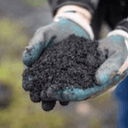
New research shows that biochar, long used to improve soil health, is rapidly expanding into applications that include wastewater treatment, carbon capture and renewable energy production. A recent review highlights how engineered biochar’s porous structure, surface chemistry and electrical properties can enhance nutrient recovery, boost biogas generation and absorb carbon dioxide. Researchers say these advances position biochar as a multifunctional material capable of linking water, carbon and energy systems within a circular, low-carbon framework, though challenges remain around scalability and long-term performance.

Holcim has invested in Norway-listed Capsol Technologies to support the scale-up of advanced post-combustion carbon capture as part of its decarbonization strategy. The investment targets Capsol’s hot potassium carbonate technology, which captures CO₂ from cement flue gases and is designed to improve energy efficiency and heat recovery. The partnership builds on a 2025 demonstration project at Holcim’s Dotternhausen plant in Germany and aims to accelerate the production of near-zero cement.

As world leaders gathered in Belém, Brazil, for COP30 in November 2025, blockchain-based carbon credits emerged as both a promising innovation and a contested tool in global climate action. Advocates argue the technology could improve transparency, accountability and funding for reforestation and conservation, particularly in the Global South. Critics warn that without stronger regulation, blockchain credits risk enabling greenwashing and delaying meaningful emissions reductions. Hosting the summit in the Amazon placed renewed focus on how emerging technologies could support credible, equitable climate finance.

The data center industry faces a growing power shortage as AI-driven demand outpaces the ability to build new electricity generation, according to Uptime Institute’s 2026 predictions. The report says AI infrastructure is becoming more concentrated among large providers, power costs are rising, and operators may turn to carbon capture, on-site generation, and limited AI automation to manage growth and resiliency challenges.
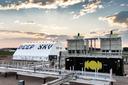
Nikkiso CE&IG supported the commissioning of Deep Sky Alpha in Alberta, Canada’s first operational facility to capture and permanently store atmospheric CO2 in sedimentary formations. The technology-agnostic DAC platform integrates multiple capture systems and is designed to remove up to 3,000 metric tons of CO2 annually, marking a significant step toward the commercialization and industrialization of scalable carbon removal technologies.
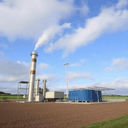
NEG8 Carbon and Prochem Engineering have signed an engineering study to develop Ireland’s first large-scale direct air capture system, starting with a 50-tonne-per-year module in Waterford. The project advances NEG8 Carbon’s electrostatic DAC technology and supports Ireland’s role in developing scalable carbon capture solutions for a low-carbon future.

The Carbon Removers has secured nearly £1 million in backing from South of Scotland Enterprise to accelerate its expansion across the UK and Europe, kickstarting a wider fundraising round. Headquartered near Dumfries, the company plans to remove one million tonnes of CO₂ annually by 2030 and aims to generate £1 billion in annual revenue by 2034/35, while supporting Scotland’s transition to net zero. The investment reinforces the South of Scotland’s growing reputation as a hub for innovation, with strong support from government and regional leaders.

Carbon Centric has received NOK 9.51 million in pre-project funding from Enova to develop a carbon capture facility at Norske Skog Skogn’s bioenergy plant in Skogn. The project, based on 100% biogenic biomass, has the potential to deliver permanent carbon removal and produce sustainable liquefied CO₂, with the grant covering half of the pre-project costs under Enova’s Industry 2050 programme. The funding will support work toward a final investment decision planned for 2027.
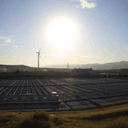
Foxconn and Pace CCS have launched a partnership to advance carbon capture and storage (CCS) technology by combining Foxconn’s precision manufacturing expertise with Pace CCS’s specialized design knowledge. The collaboration includes a new laboratory to test a chemical scavenger, already used in other industries, aimed at preventing corrosive reactions in CO₂ streams that can damage CCS infrastructure. Carbon capture is critical to achieving net-zero emissions, with global demand estimated at eight billion metric tons of CO₂ annually, requiring trillions of dollars in investment. Corrosion, erosion, and clogging caused by chemical reactions in CO₂ streams, including the formation of sulfuric and nitric acids, remain key technical challenges for the sector. Matthew Healey, managing director of Pace CCS, said the solution could turn a major technical challenge into a manageable operational expense, accelerating CCS deployment worldwide. Foxconn Chief Environment Officer Ron R. T. Horng added that the collaboration demonstrates how cross-industry partnerships can drive meaningful progress against climate change.
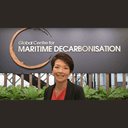
GCMD’s life-cycle assessment of Project CAPTURED shows that onboard CO₂ capture combined with mineralisation-based utilisation can reduce emissions more than permanent storage, with potential savings of up to 71% under optimised conditions. The study also notes that current maritime GHG accounting frameworks underestimate the benefits of CO₂ utilisation, highlighting the need for more comprehensive measurement and reporting.

Gevo has named Alex Clayton Chief Carbon Officer as part of its strategic realignment, aiming to expand its voluntary carbon market business. The company’s North Dakota facility produces engineered carbon dioxide removal credits with thousand-year permanence, supporting both emissions reduction and new revenue opportunities.
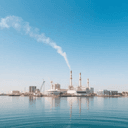
Abu Dhabi’s Supreme Council for Financial and Economic Affairs has launched a new Carbon Capture Policy to regulate Carbon Capture, Utilisation and Storage (CCUS) activities across the emirate and support significant emissions reductions. The policy establishes a comprehensive legislative and regulatory framework, promotes partnerships and shared infrastructure, and encourages investment, job creation and economic diversification. It reinforces Abu Dhabi’s and the UAE’s commitment to environmental sustainability, international climate efforts and long-term natural resource conservation.
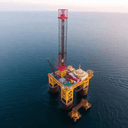
Denmark has awarded its first nearshore CO₂ storage exploration licence to TotalEnergies and Mitsui, with Nordsøfonden taking a 20% stake. The project expands Denmark’s efforts to develop large-scale carbon storage and supports national climate goals.

Nuada and MLC have signed an agreement to deploy a demonstration carbon capture unit at MLC’s Singleton Birch lime plant in North Lincolnshire to address unavoidable emissions from lime production. The project will generate performance data to support future large-scale deployment of Nuada’s low-energy, compact carbon capture technology in a hard-to-abate industrial sector. The collaboration supports MLC’s goal of achieving carbon neutrality by 2050 while advancing practical pathways for low-carbon lime production aligned with UK and international climate targets.
Agenda released for 19th Annual International Biomass Conference & Expo

By BBI International
January 09, 2026
Biomass Magazine has released the agenda for the 19th Annual International Biomass Conference & Expo, scheduled for March 31-April 2, 2026, at the Gaylord Opryland Resort & Convention Center in Nashville, Tennessee.

The Alaska Department of Natural Resources has launched a statewide CCUS information hub designed to support industry, researchers and the public with centralized geological, technical and regulatory data. The online platform consolidates decades of information to inform carbon capture, utilization and storage project development across Alaska.

Bison Low Carbon Ventures Inc. has completed commissioning operations for the Phase 1 facility at its Meadowbrook Carbon Storage Hub near Legal, Alberta. The project is the first carbon capture and storage hub in Alberta to enter service and is licensed for up to 500 kilotonnes of CO₂ injection annually.

Mantel Capture has launched a front-end engineering design study for a commercial-scale carbon capture project with a Canadian oil and gas producer. The project will integrate Mantel’s molten borate technology into existing SAGD operations and is designed to capture approximately 60,000 metric tons of CO₂ annually.

Vallourec and Geostock have signed a memorandum of understanding to accelerate development of large-scale underground storage infrastructure for the energy transition. The partnership focuses on hydrogen storage and carbon capture, utilization and storage applications.

Capital Clean Energy Carriers Corp. has taken delivery of the world’s first 22,000-cubic-meter low-pressure liquid CO2 carrier, Active, marking a milestone for marine transportation within the emerging CCUS value chain. The vessel is designed to transport liquid CO2 while retaining flexibility to operate across conventional gas markets.
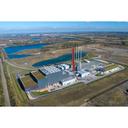
Encyclis has secured planning permission to develop a full-scale carbon capture plant at its Rookery South Energy Recovery Facility in Bedfordshire. The approval supports the company’s strategy to deploy carbon capture across its Energy-from-Waste portfolio and advance decarbonization of residual waste treatment.
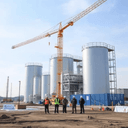
SAMSUNG E&A has started construction on a low-carbon ammonia plant in Indiana backed by the U.S. and South Korean governments. The project will produce 500,000 tons of ammonia annually while capturing significant carbon emissions, with completion targeted for 2029. The initiative underscores growing bilateral cooperation on energy transition and decarbonization.
API released Recommended Practice 1192 to provide guidance for the safe and reliable transport of carbon dioxide by pipeline. The new standard addresses design, operation and integrity considerations specific to CO₂ as pipeline infrastructure for carbon storage continues to expand.
Treasury and the IRS issued guidance establishing a safe harbor for taxpayers claiming the carbon capture tax credit for qualified carbon oxide stored in secure geological formations during 2025. The guidance allows alternative reporting and certification if federal greenhouse gas reporting tools are not available in time.
Mercer Peace River Pulp and Svante have begun operating a CO₂ capture demonstration unit at a pulp mill in northern Alberta to evaluate solid sorbent carbon capture technology on biogenic emissions. The six-month pilot is intended to inform future engineering decisions and potential commercial-scale deployment in the pulp and paper industry.
Advertisement

@ Copyright 2026 - BBI International - All rights reserved.