


Prometheus Hyperscale, Spiritus, and Casper Carbon Capture announce a strategic partnership to develop a pioneering carbon-negative digital infrastructure campus in Wyoming.

The German government has begun preparations for the next round of its “climate contract” support scheme for industry decarbonisation.

Holcim UK has appointed a new Carbon Capture, Utilization, and Storage (CCUS) Director to advance its strategy toward near-zero cement production. The role will lead Holcim’s CCUS projects and reinforce the company’s commitment to scaling carbon capture as a key pathway to net zero.

Brazil has launched a national CCUS Subcommittee under its Ministry of Mines and Energy to implement the country’s 2024 Fuel of the Future law and anchor its strategy for COP30. The group brings together Petrobras, TotalEnergies, FS Energia, SLB New Energy, and other key stakeholders to advance carbon capture, storage, and regulatory frameworks.

Babcock’s LGE business has secured Approval in Principle from Lloyd’s Register for its ecoCPTR® onboard carbon capture system. The technology combines Aqualung’s facilitated transport membrane capture with Babcock’s ecoCO2® system, offering a compact, modular solution for both new and retrofitted vessels.

The Government of Canada has announced $5.8 million in funding for carbon capture, utilization, and storage projects in British Columbia. The investments will support Svante, Anodyne Chemistries, and Agora Energy Technologies in advancing CO₂ capture, storage, and conversion innovations, from flue gas utilization to producing valuable chemicals.

Latvia’s Prime Minister Evika Siliņa recently visited SCHWENK’s cement plant in Brocēni to see Capsol Technologies’ carbon capture unit in action. The demonstration highlighted CapsolGo®’s ability to efficiently capture CO₂ while integrating seamlessly with existing plant operations.
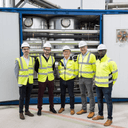
Nuada’s next-generation carbon capture solution is now operational at enfinium’s Ferrybridge-1 energy from waste facility in West Yorkshire. The trial will showcase the performance of Nuada’s carbon capture technology in an industrial EfW setting for the first time.

ION Clean Energy has unveiled ICE Blocks™, their new line of self-contained, modular carbon capture units tailored for smaller post-combustion emission sources like natural gas facilities and other hard-to-abate flue gas emitters. The units, designed in partnership with Modular Plant Solutions, are quickly deployable, scalable, and transportable via road, rail, or sea.

Equinor, Shell, and TotalEnergies have stored the first CO₂ volumes at Norway’s Northern Lights CCS project, marking the world’s first operational open-access CO₂ transport and storage facility. Phase 1 capacity of 1.5 million tonnes per year is fully booked, with Phase 2 set to expand to 5 million tonnes annually.
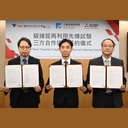
Mitsubishi Electric signs collaboration agreement with Industrial Technology Research Institute, the Taiwan Tobacco & Liquor Corporation and Jhunan Brewery for demonstration tests to capture and utilize CO₂ from brewery flue gas in a beer production line.

Block Energy is pleased to announce that it has completed its initial CO2 injection as part of the Carbon Capture and Storage ("CCS") project. Following data review, injection rates will likely be optimised, providing the potential to increase per-well injection capacity.
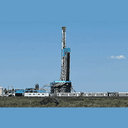
The Sweetwater Carbon Storage Hub successfully completed the drilling operations for a second deep-characterization well, a key step in advancing commercial-scale carbon sequestration in Wyoming.
Summit Carbon Solutions has a new CEO, Joe Griffin, who authored letters this week to signed and unsigned landowners along the carbon pipeline project route.

OCOchem and ADM announce a production partnership between the companies to build an innovative new CO2 conversion facility at one of ADM's existing locations.
Al Nouf Independent Power Producer project will be designed to offer high efficiency, operational flexibility, and reduced emissions. The advanced plant will enable the further integration of renewable and clean energy by primarily providing transitional capacity.
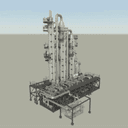
Iluka Resources has awarded JordProxa the contract to supply a custom-engineered CO₂ capture plant for its flagship Eneabba rare earths refinery in Western Australia, a first-of-its-kind facility in Australia and among only a few rare earths refineries outside China.
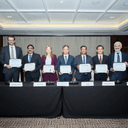
An industry consortium comprised of leading steelmaker sare undertaking a pre-feasibility study to assess the development of Carbon Capture, Utilisation and Storage (CCUS) hubs across Asia. The CCUS Hub study is the first independent industry-led study of its kind in Asia and will examine the technical and commercial pathways to utilising CCUS in hard-to-abate industries across Asia.
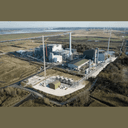
Evero, the low-carbon energy-from-waste wood company, has been selected by the UK Government to enter negotiations to transform its Evero Ince Biomass plant into the nation's first Bioenergy with Carbon Capture and Storage facility. This project looks to provide clean energy to the grid while permanently removing CO₂ from the atmosphere.

Ethanol Producer Magazine has proudly announced dates for the 42nd annual FEW, taking place on June 2-4, 2026. The industry’s premier event will return to St. Louis, Missouri and be held at the America’s Center. As the longest-running and largest ethanol conference in the world, the FEW 2026 will continue to provide insights and opportunities that shape the ever-changing future of the ethanol industry.

Elimini’s Q2 report highlights record-breaking growth in engineered carbon removals, driven by Microsoft’s landmark BECCS purchases. The report also notes biochar’s rise past DAC as the second-largest removal pathway by volume.

Carbon Ridge, a leading developer of onboard carbon capture and storage solutions for the maritime industry, has achieved a shipping industry first with the successful deployment of a centrifugal onboard carbon capture system (OCCS) aboard an LR2 product tanker owned by Scorpio Tankers Inc.

Elimini has signed a joint development agreement with Greater Copenhagen’s public utility HOFOR to explore the development of a large-scale bioenergy with carbon capture and storage (BECCS) facility at the Amagerværket combined heat and power plant in Copenhagen, Denmark.
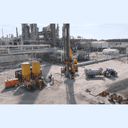
ExxonMobil Benelux has kicked off construction on its Carbonate Fuel Cell (CFC) pilot project in Rotterdam, aiming to capture over 90% of CO₂ from natural gas emissions while simultaneously producing power, hydrogen, and heat. The scalable system, developed in partnership with FuelCell Energy, could reshape CCS economics by making carbon capture not a cost center—but a generator of clean energy.
BKV Corporation announced the execution of an agreement with a leading diversified midstream energy company to develop a new carbon capture and sequestration (“CCS”) project at a currently operating natural gas processing plant in East Texas. The agreement expands on a previously announced agreement between the companies to develop a separate CCS project at a location in South Texas.

Technip Energies and Shell Catalysts & Technologies have signed their global alliance agreement to work exclusively together to deliver a post-combustion amine-based carbon capture solution using Shell’s CANSOLV1 CO2 Capture System.

CF Industries Holdings, Inc. announced the start-up of the carbon dioxide (CO2) dehydration and compression facility at its Donaldsonville Complex in Louisiana. The facility will enable the transportation and permanent geological sequestration of up to 2 million metric tons of CO2 annually that would otherwise have been emitted into the atmosphere.

NEXTCHEM has been awarded about €210 million basic engineering and critical proprietary equipment supply contract for the Pacifico Mexinol project. This ultra-low carbon methanol production facility will be located in Sinaloa, Mexico, and will have a capacity of 2.1 million tons per year. Once operational in 2029, it is poised to be the largest single ultra-low carbon methanol facility in the world – producing approximately 350 thousand metric tons.

Ground-breaking technology developed at Trinity, which captures carbon dioxide from the atmosphere, is being put through its paces at Dublin Airport – with the team behind its creation hoping to demonstrate its wider potential for capturing carbon in the aviation and e-fuel industries. This deployment marked the first industrial-scale field test of the technology.
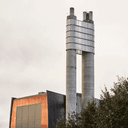
Hafslund Celsio announces the sale of 1.1 million tonnes of permanent carbon removals to Microsoft over a 10-year period. The agreement is a significant contribution to the commercial success of Hafslund Celsio’s full-scale CCS project in Oslo and is a recognition of the waste-to-energy sector as a credible provider of permanent carbon removals.
Advertisement

@ Copyright 2026 - BBI International - All rights reserved.